
Tamagotchi is a handheld digital pet created in Japan by Akihiro Yokoi of WiZ and Aki Maita of Bandai. It was first released in 1996 and quickly became one of the most popular toy fads of the late 1990s and early 2000s.
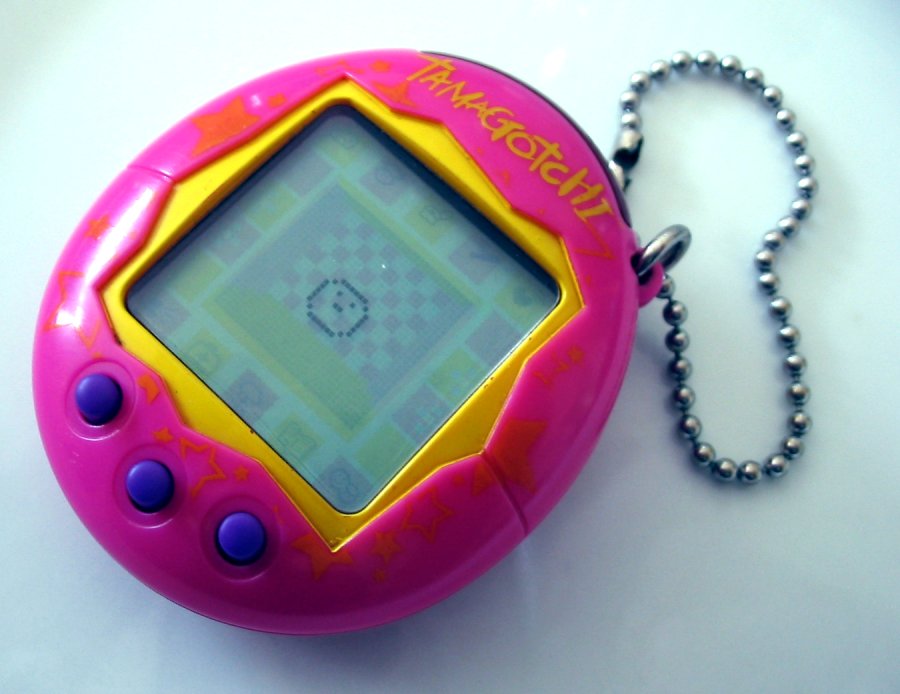
Tamagotchi Connection V1, released in 2004 - wikimedia 
The name "Tamagotchi" is a portmanteau of the Japanese words *tamago* (egg) and *uotchi* (a transliteration of "watch"), highlighting the egg-shaped device and its wearable, portable design.
# How It Works Each Tamagotchi device houses a small digital screen that displays a pet — typically an alien-like creature — that hatches from an egg. Players are responsible for taking care of the pet by feeding it, cleaning up after it, playing with it, and providing medicine or discipline when needed.
If neglected, the pet can become sick or even die, requiring the user to reset the device and start again.
# Generations and Features Over the years, Bandai released numerous versions of the Tamagotchi, introducing features such as: - Color screens - Touch input - Infrared communication between devices - Mobile app integration - Bluetooth and NFC connectivity - The ability to marry, reproduce, and raise family generations
Later models allowed players to connect their Tamagotchi to others for social interaction, including games, gifts, and breeding.
# Cultural Impact Tamagotchi became a cultural phenomenon, selling over 80 million units worldwide. It spawned: - Animated TV series and movies - Mobile games - Smartwatch versions - A line of licensed merchandise - A nostalgic resurgence among adult fans and collectors
In many ways, Tamagotchi was a precursor to modern virtual pets, mobile games, and even the emotional relationships we now form with digital companions and AI.
# Legacy Tamagotchi's enduring appeal lies in its simplicity, emotional connection, and cute aesthetic. It bridged the gap between toy and digital life form, and continues to evolve with new generations of technology.
# See
- bandai.com  - Tamagotchi on wikipedia